business@webideasole.com
Managing 20, 50 or 200+ vehicles across different locations is a real challenge. One is running behind schedule, another needs servicing, a driver hasn’t shared any updates and the accounts team is still waiting for trip expenses.
In most cases, the operations team spends half the day calling drivers, checking spreadsheets and coordinating updates. Yet by the end of the day, you still don’t have a clear picture of how efficiently your fleet is performing.
This is why fleet management software makes sense.
Instead of managing vehicles, drivers, consignments, and transport activities manually, you can access everything from a well-connected software system.
So, how does this software actually work and does your business actually need it? Let’s break it down!
Fleet management software is a digital solution for organizations to manage their transportation business and vehicles through a centralized platform.
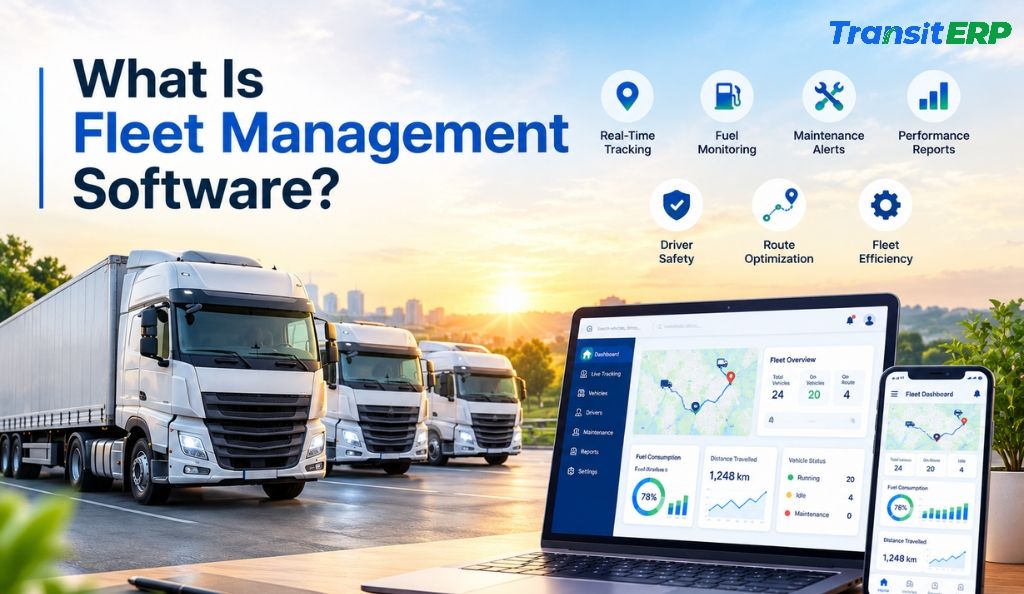
It enables fleet businesses or backend teams to manage vehicle tracking, driver management, trip monitoring, fuel management, maintenance and operational expenses.
In simple words, a fleet management system gives businesses better control over their vehicles and the activities associated with them.
For example, a logistics company operating 40 trucks across multiple states can use this software to assign trips, maintain vehicle records, monitor vehicle movement and review operational performance without depending entirely on manual updates.
But a fleet management system is not the same as transport management software.
Even though the exact process depends on individual software’s capabilities, available hardware and personalized integrations, here is how a fleet management application usually works:
The process starts by accessing information about vehicles, drivers, and their activities. GPS tracking devices, telematics systems, vehicle sensors and driver applications can provide location, fuel consumption, routes/lanes, vehicle health, and real-time operational activities.
The collected information is sent to the software program, where it is organized and processed.
Instead of checking the records separately for each vehicle, location, trip details and maintenance history, fleet managers/team can access relevant information through a single dashboard.
The software provides information regarding any operational changes and can generate notifications based on predefined conditions.
For example, managers can receive information about any unexpected changes in the route, delays in the trips, the need for vehicle maintenance or the expiry of documents.
The final step is turning operational information and activities into useful insights. You can review vehicle utilization, trip performance, fuel expenses and maintenance costs to identify inefficiencies and make better operational decisions.
This is what makes fleet management software more valuable than a basic vehicle tracking tool.
Every business has its own goals, priorities, and may need a different set of features. However, some common capabilities that make fleet management systems effective are:
One of the most efficient features is fleet management. Using GPS-enabled devices or compatible telematics integrations, you can monitor vehicle locations, track movement and review journey progress. This helps in:
Managing multiple trips manually can become complicated, especially when vehicles operate across different routes and destinations. Fleet management software helps in:
Managing vehicles alone doesn’t determine fleet performance. Driver availability, performance and accountability also play a major role. Driver management software helps businesses in:
Fuel management and fleet maintenance systems help reduce operational expenses for many commercial fleets. When integrated with suitable sensors and telematics devices, they can help with:
Many vehicles do not necessarily translate to improved fleet management performance, since inefficiency in asset utilization results in higher expenses. Fleet optimization software helps businesses analyze:
Fleet management software is useful to large logistics companies as well as small to medium commercial transportation businesses. Some common examples include:
Managing a fleet efficiently requires more than tracking vehicles. Businesses need connected control of trips, drivers, and vehicle utilization, expenses and the operational activities that keep transportation running.
If you are looking for demo software, try TransitERP. It helps transport businesses manage, monitor and track trips through a unified system. From lane and route planning to vendor and contractor management, consignment and ePOD/LR management and AI-powered analytics, it helps bring essential transport workflows together.
For customization or integrations, get a free consultation with experts today!
Fleet management software is a digital platform that helps businesses manage vehicles, drivers, trips, maintenance and operational expenses from a centralized system.
Fleet management software works by gathering data on vehicles, drivers, and trips using GPS devices, telematics, mobile applications, or manual inputs. The program uses the collected data and consolidates it into a dashboard.
Both terms are often used interchangeably. However, a fleet management system can refer to the complete combination of software, hardware and processes used to manage fleet operations, while fleet management software specifically refers to the digital application.
Common features include vehicle tracking, trip and route management, management of drivers, fuel management, vehicle maintenance management, expenses, performance alerts, and reporting.
It assists in detecting fuel waste, inefficient routes, excessive use of vehicles, cost of maintenance, and delays in operations. This allows businesses to better manage their fleet costs.
Yes. If there are GPS devices and right integration, it will help to trace location of vehicles and track progress in trips along with driver information. Driver assignments can also be done with the help of this platform.
It assists in scheduling preventative maintenance, keeping service records, monitoring repair costs, and issuing servicing reminders. This way, companies can solve their maintenance problems before they cause any unforeseen disruption in operations.
The function of fleet management software concentrates mostly on the management of the fleet of vehicles, the drivers, maintenance and usage of the vehicles. The transport management software encompasses wider aspects of the transportation process such as route planning, consignment management, vendor management and more.
Logistics companies, transport operators, e-commerce businesses, delivery services, manufacturers and organizations managing multiple commercial vehicles can benefit from fleet management software.
Evaluate your operational requirements, essential features, customization options, scalability, integration capabilities, mobile accessibility and reporting tools. Choose a solution that addresses your current challenges while supporting future business growth



Reach out, we’d love to hear from you!